Coarse, Medium, Fine: Reading Slot Volatility Like Your Barista Reads a Grind
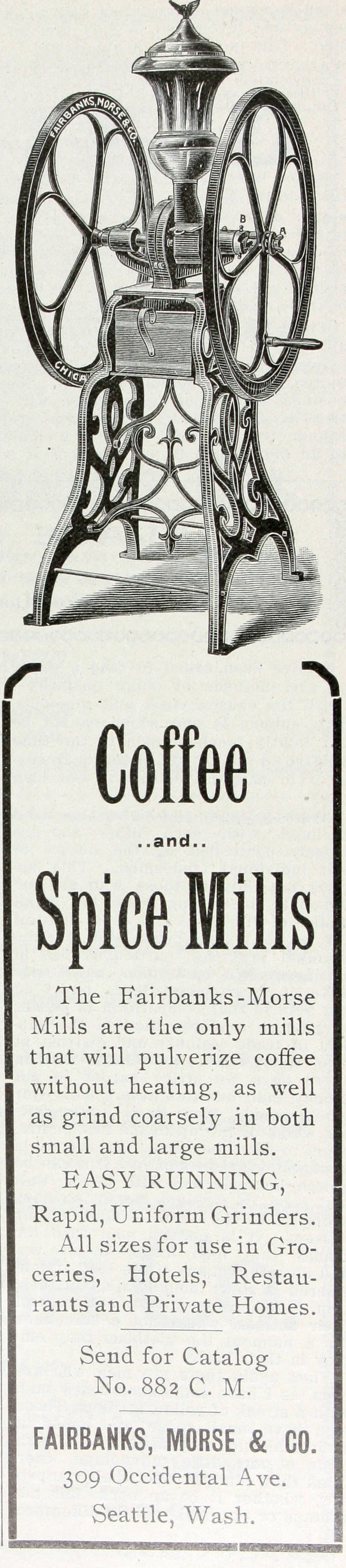
Photo: Morse & Company Fairbanks, Public domain, via Wikimedia Commons
Walk into a good cafe and ask for a coffee. The barista does not just hand you a cup and hope for the best. They choose a grind, a brew method, and a strength that matches what you ordered. Slots work the same way. The flashing lights and theme music get the attention, but volatility is the grind setting underneath. It shapes how the session feels, how long your bankroll lasts, and how often you see a meaningful payout. At Cafe303, we like to think of volatility as the difference between a lazy drip coffee and a double espresso: same counter, very different experience.
Volatility Is the Grind, Not the Flavor
Volatility, also called variance, describes how a slot distributes its payouts. It is not the same as return to player, and it does not tell you whether a machine is 'due.' A low-volatility slot tends to pay smaller amounts more often. A high-volatility slot tends to stay quiet for longer stretches and then produce bigger, rarer hits. Medium volatility sits in between.
Think of it this way: a coarse grind in a french press gives you a slow, even extraction. A fine grind in an espresso machine gives you a short, intense pull. Neither is automatically better. The question is what you want from the cup in front of you.
Low Volatility: The Drip Coffee of Slots
Low-volatility machines are the house drip. They are built for steady sipping. You will see more frequent wins, but they tend to be smaller relative to your bet. Many classic three-reel games, fruit-themed machines, and simpler video slots live in this zone. They are a good fit if you want a long session, a modest bet size, and fewer stomach-dropping dry spells.
For bankroll purposes, a casual player might treat low volatility as a 1% to 2% of session bankroll per spin kind of drink. If you sit down with $100, that is roughly $1 to $2 per spin. You are buying time and rhythm, not chasing a headline jackpot. The trade-off is obvious: the big hit is less likely to arrive, and when it does, it may not be life-changing.
Medium Volatility: The House Pour
Medium volatility is the standard pour at the cafe. It is balanced enough for a casual session but still has some kick. Lots of branded video slots and popular casino-floor games land here. You will get some smaller wins to keep the screen moving, but you should still expect gaps between meaningful payouts.
A reasonable casual range is about 0.5% to 1% of your session bankroll per spin. With $100, that is roughly 50 cents to $1 per spin. This is the category many players default to because it does not require the patience of a saint or the bankroll of a whale. It also pairs well with a 45-minute to two-hour session, depending on how fast you spin.
High Volatility: The Espresso Shot
High-volatility slots are the double espresso. They can be thrilling, but they are not built for casual sipping. The dry spells can be long, and the payouts can be heavily concentrated in rare events. Link-style games, many progressive-style machines, and titles with big bonus features often sit in this range. Popular games like Buffalo Gold, 88 Fortunes, and Dancing Drums are commonly described as medium-to-high volatility, though exact settings can vary by machine and jurisdiction.
For high volatility, a cautious player might use 0.25% to 0.5% of session bankroll per spin. With $100, that is 25 to 50 cents per spin. That number can feel shockingly low if you are used to dollar spins. But high volatility demands more patience, not more courage. If you only have enough bankroll for 30 spins, you are not really playing a session. You are buying a lottery ticket with extra steps.
Match the Cup to Your Bankroll and Patience
The useful math is simple: divide your session bankroll by your spin size to estimate how many spins you can absorb. A $100 bankroll at $1 per spin gives you 100 spins before you hit zero, ignoring wins along the way. That is not a lot on a fast machine. A $100 bankroll at 50 cents gives you 200 spins. A $100 bankroll at 25 cents gives you 400 spins.
Now match that to your mood. If you want to chat with a friend, sip something cold, and press spin for an hour, low volatility is your drip coffee. If you want a balanced session with a little suspense, medium is the house pour. If you want a short, sharp thrill and you can walk away without chasing, high volatility is the espresso shot. What you should not do is order an espresso, sip it like a latte, and then get annoyed that it is gone in three minutes.
The Cafe303 Order Card
| Your mood | Volatility to consider | Rough spin range on $100 | Session feel |
|---|---|---|---|
| Long, easy hang | Low | $1 to $2 | Steady, frequent small wins |
| Balanced night out | Medium | 50 cents to $1 | Some gaps, some action |
| Short, sharp thrill | High | 25 to 50 cents | Long dry spells, rare big hits |
| Very small bankroll | Low or medium | 1% or less per spin | Protect your time on the machine |
| Chasing a jackpot | High, with caution | 0.25% to 0.5% | Set a hard loss limit first |
Order What You Will Actually Enjoy
Volatility is not a ranking. It is a preference. The player who loves a slow, steady drip is not doing it wrong, and the player who orders a double espresso is not automatically brave. The mistake is ordering one style and expecting the other. Read the menu, check your bankroll, decide how long you want to sit, and then pick the grind that fits. That is the whole Cafe303 approach: know what is in the cup before you take the first sip.